Tea! The world’s most beloved beverage. It has enticed and delighted for more than two thousand years. But where does it come from? Who first discovered this delightful brew? Surely, it must have been an incredible figure from the mists of time!
The truth is, we don’t know. But there are a few legends. And if you’re like me, you also love a good legend.
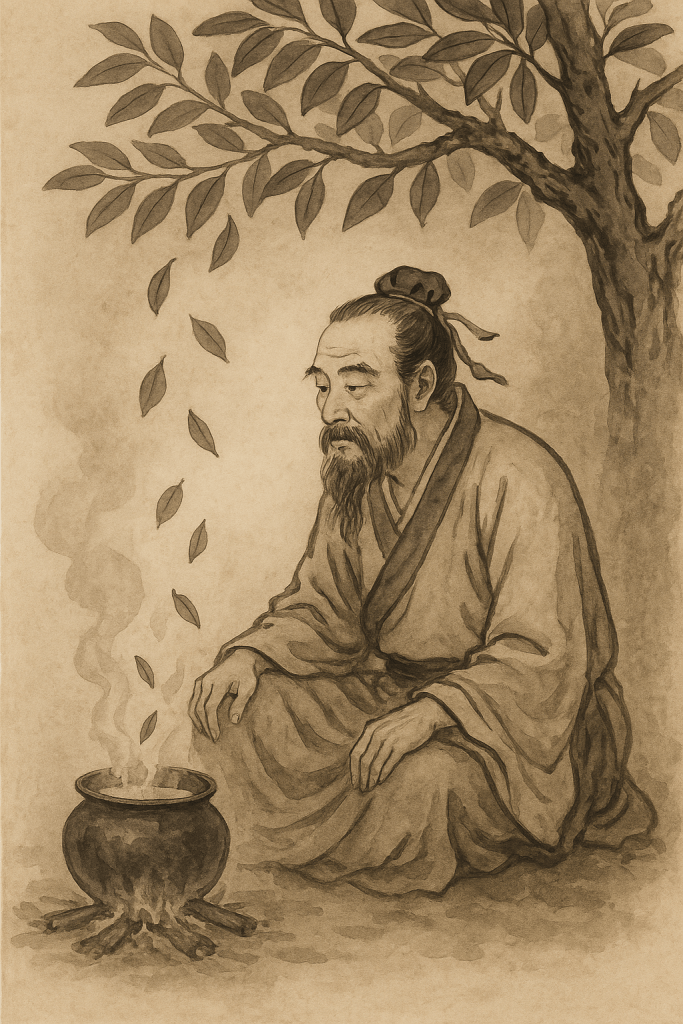
Shen Nong and the Accidental Brew
Our first story begins, quite fittingly, in China, where tea’s roots are historically deepest. Step back in time to the age of the First Emperor and Divine Herbalist, Shen Nong.
It is said that Shen Nong spent his life traveling the land, tasting every plant he came across to study its effects on the human body. According to some tales, the skin on his stomach was transparent so he could see how each plant affected him internally (note: do not try this method at home).
One long day, after sampling a slew of poisonous herbs, Shen Nong was exhausted and ill. He paused to rest beneath a tree and, being a health-conscious proto-scientist, lit a fire to boil some water. As he dozed off, leaves from the tree above fluttered into the pot. When he awoke, he noticed the fragrant infusion and drank it. Instantly, he felt renewed, clearer, stronger, and more alert.
Thus, tea was discovered. Shen Nong shared his knowledge generously, and tea began its long journey through Chinese medicine and culture as both a sacred drink and a healing remedy.
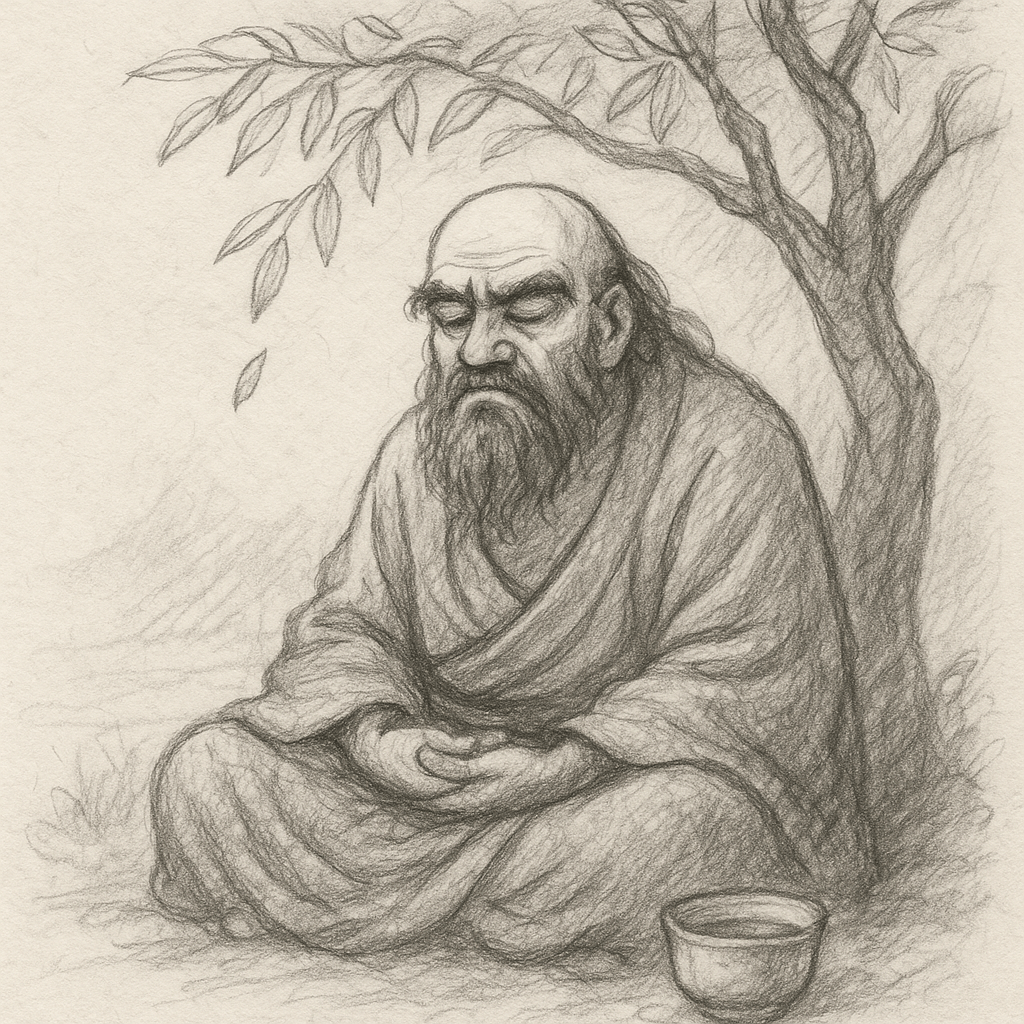
The Bodhidharma and the Eyelids of Enlightenment
Now we travel west to India, where another legend brews—this one featuring Bodhidharma, the founder of Zen Buddhism.
The story goes that one day, during a long meditation, Bodhidharma found himself nodding off. Falling asleep while meditating? A big no-no in the monastic world. Frustrated with his own weakness, Bodhidharma took drastic action—he tore off his eyelids and flung them to the ground. (Again, not recommended.)
From the soil where his eyelids landed, a tea plant is said to have grown. Since then, Buddhist monks have sipped tea to stay awake and focused through long hours of silent contemplation.
This tale gives us another piece of the tea mystery, its connection to energy, clarity, and spiritual practice. Once again, we witness the sacred within the humble leaf.
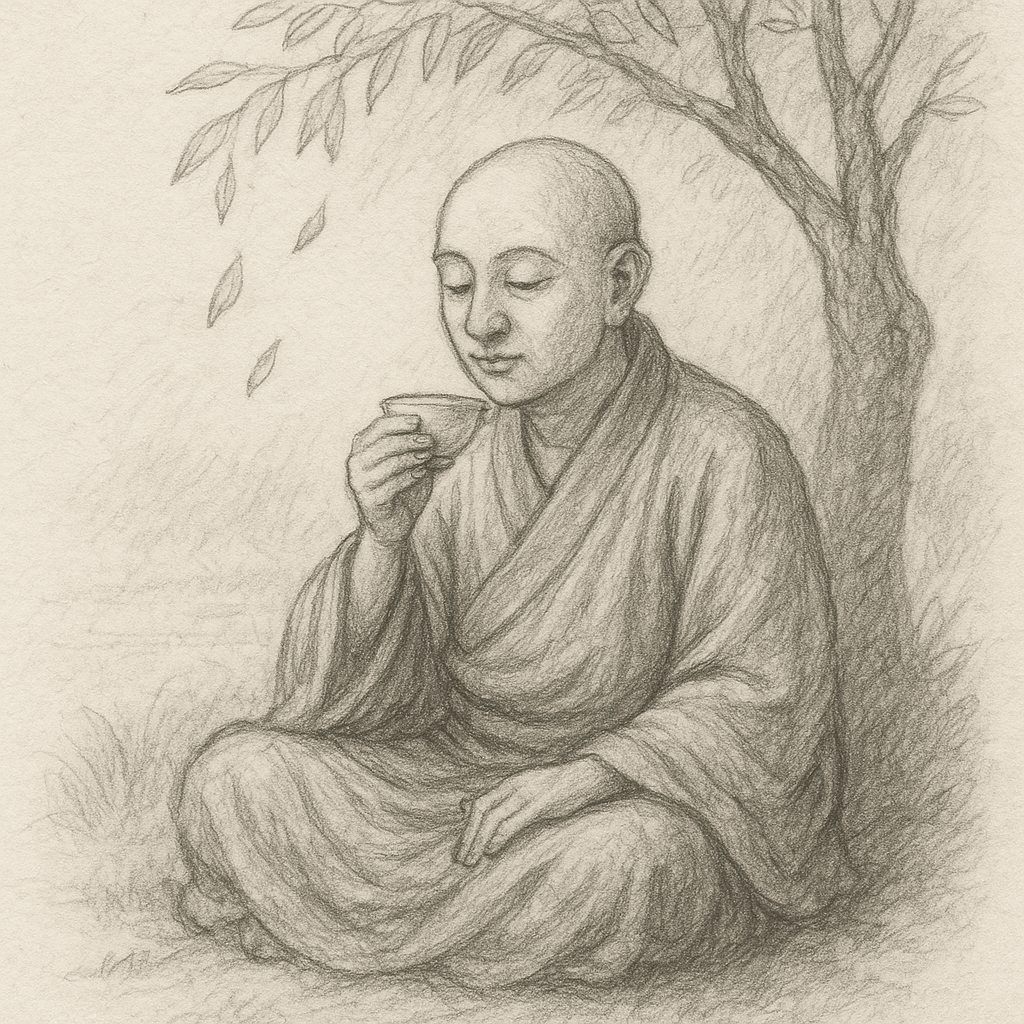
The Monks Who Carried Tea to Japan
To complete our journey, we sail to Japan—where myth meets history.
During the early Middle Ages, Japanese Zen Buddhist monks traveled to China in search of spiritual and scholarly wisdom. One such monk, Saichō, brought back tea seeds and began cultivating them in Japan. He was the first to grow tea on Japanese soil.
But it was Eisai, another Zen monk, who truly planted the seeds of Japanese tea culture. Not only did he return from China with tea seeds, he also established tea gardens, including the now-famous Kennin-ji Temple in Kyoto. Eisai wrote a short but influential treatise titled “Kissa Yōjōki” (Drink Tea and Prolong Life), laying the philosophical and medical groundwork for tea as a practice of both body and spirit.
Thanks to these monks, tea took root in Japan, blossoming into centuries of tradition—from daily rituals to the refined beauty of the tea ceremony. Once more, tea is honored not just as a drink, but as a pathway to presence, harmony, and connection with the natural world.
A Sip of the Sacred
Today, tea is sipped around the globe. Every culture has its own traditions surrounding this divine brew. It is enjoyed by millions, sometimes as a morning necessity, sometimes as a quiet moment of reflection, and sometimes simply as an excuse to pause and savor the moment.
Whether it was Shen Nong, Bodhidharma, or an unnamed herbalist lost to history who first discovered tea, the next time you raise your cup, perhaps take a quiet moment to thank them.
After all, every cup of tea holds a story, and some of them are steeped in legend.
Further Reading
Benn, James A. Tea in China: A Religious and Cultural History.
Okakura, Kakuzō. The Book of Tea.
Pettigrew, Jane. A Social History of Tea.
Heiss, Mary Lou & Robert J. The Story of Tea. Sen, Tansen. Buddhism, Diplomacy, and Trade.
Waddell, L.A. The Buddhism of Tibet or Lamaism.
Hohenegger, Beatrice. Liquid Jade.
Cooper, J.C. An Illustrated Encyclopedia of Traditional Symbols.
Elliot, Mark. China’s Tea Culture.
 Smart Pen Chronicles
Leave a comment